BSI has now published all three parts of the second generation of Eurocode 7 and has set a date for withdrawing the first generation it replaces. For anyone in London or the South East commissioning a ground investigation, reviewing a geotechnical design report or appointing a geotechnical designer over the next eighteen months, that creates a window in which two versions of the same code are both current, and the one your contract names is no longer a technical footnote.
This is a practical explainer of what has actually changed, what the transition dates commit you to, and the specific questions to ask at commissioning, review and procurement stage while both generations remain in use.
What has BSI actually published, and when does it apply
BSI's record for BS EN 1997-3:2025 shows the geotechnical structures part carrying a publication date of 31 March 2025 and listed as current. It completes a reorganization that has been underway for some time. According to ICE's overview of the Eurocode 7 second generation update, Eurocode 7 has been undergoing major improvement and reorganisation with a new part 3 (Geotechnical structures) being added to the suite of standards.
That third part did not appear in isolation. The same ICE briefing notes that Part 1 of the first generation of Eurocode 7 for geotechnical design was introduced 20 years ago with part 2 published a few years later, and that they replaced the former UK design standards created by the British Standards Institution (BSI) in 2010. The second generation now sits alongside, and in time will replace, that first generation set.
How Eurocode 7 is now structured differently
The practical change for anyone reading a geotechnical design report is that the content has moved. ICE's briefing records that Dr Andrew Bond, who chaired the Eurocode 7 committee through its redevelopment, directed the six teams that transformed Eurocode 7 from two to three parts: general rules, ground properties, and geotechnical structures.
That matters when you are checking a report against the code it claims to follow. A design justification that used to sit in a single general rules document may now be split across the general rules part and the new geotechnical structures part, and a report written against the first generation will reference a different part structure entirely to one written against the second.
The transition timeline you need to work to
BSI's guidance on the transition sets out the schedule plainly. The second generation of EN Eurocode standards is expected to be published between 2023 and 2026, with documents published as soon as they are available, to enable users to prepare for the transition from the first generation to second generation of Eurocodes. As set out in the National foreword of the BS EN second generation Eurocodes, UK adoptions of the first generation of Eurocodes will be withdrawn by BSI on 30 March 2028, and there is a period of coexistence between 2023 and 2028 during which both first and second generation Eurocodes are available.
That date is not unique to BSI's own product pages. IStructE's manual for geotechnical design to Eurocode 7, which supports the first generation code, describes itself as expected to remain current until at least 2028, supporting the geotechnical design of structures to BS EN 1997 Parts 1 and 2:2004/7 for UK construction. Two separate institutions are pointing at the same withdrawal horizon, which is useful if you need to justify a design basis decision to a client or a funder.
Can a project mix first and second generation Eurocode 7?
This is the question that actually affects a live job, and BSI's guidance gives a two-part answer. First, a default: until 30 March 2028, the first generation documents should be considered as the applicable standards for buildings and civil engineering works constructed in the UK unless otherwise specified by the relevant authority or in the specification for a particular project. Silence in the specification does not mean the second generation applies. It means the first generation does.
Second, a caution for anyone tempted to pick and choose clauses from whichever generation is more convenient: while the use of provisions in second generation Eurocodes in conjunction with first generation Eurocodes is not precluded, it should be undertaken with care and should only be done when users are satisfied that it will not result in a lower level of reliability than the minimum level set in the first generation. That is a judgement a designer has to be able to defend, not a box to tick.
What it means for commissioning a ground investigation now
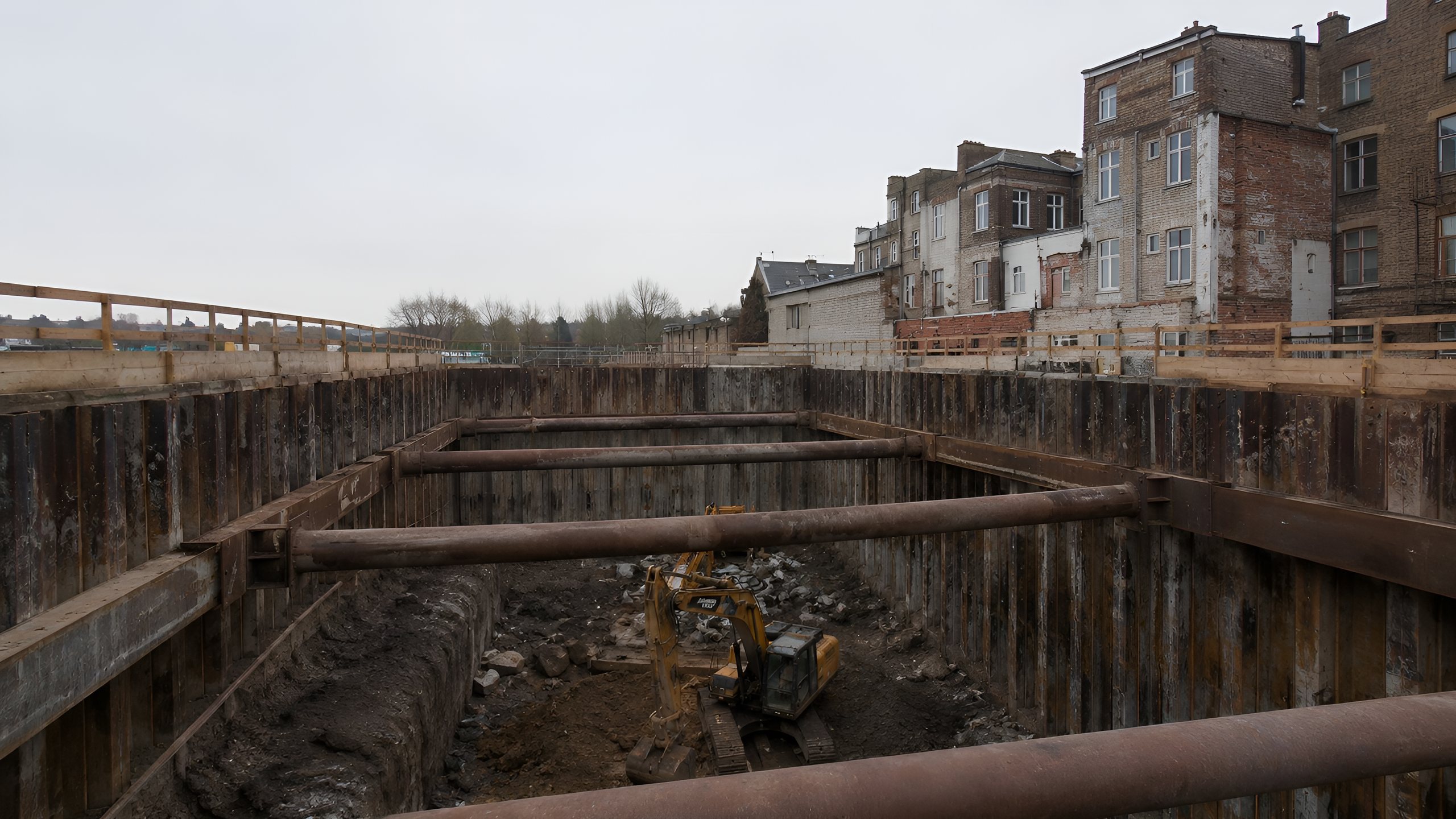
A ground investigation brief and the factual and interpretive reports that follow it are produced to serve a specific design basis. IStructE's manual for geotechnical design to Eurocode 7 sets out the scope that work typically covers, including the ground investigation report, geotechnical design report, overall stability, design of conventional foundations, cantilever or single-propped excavations, concept design of specialist technical constructions, strength, stability, serviceability and durability, and characteristic values.
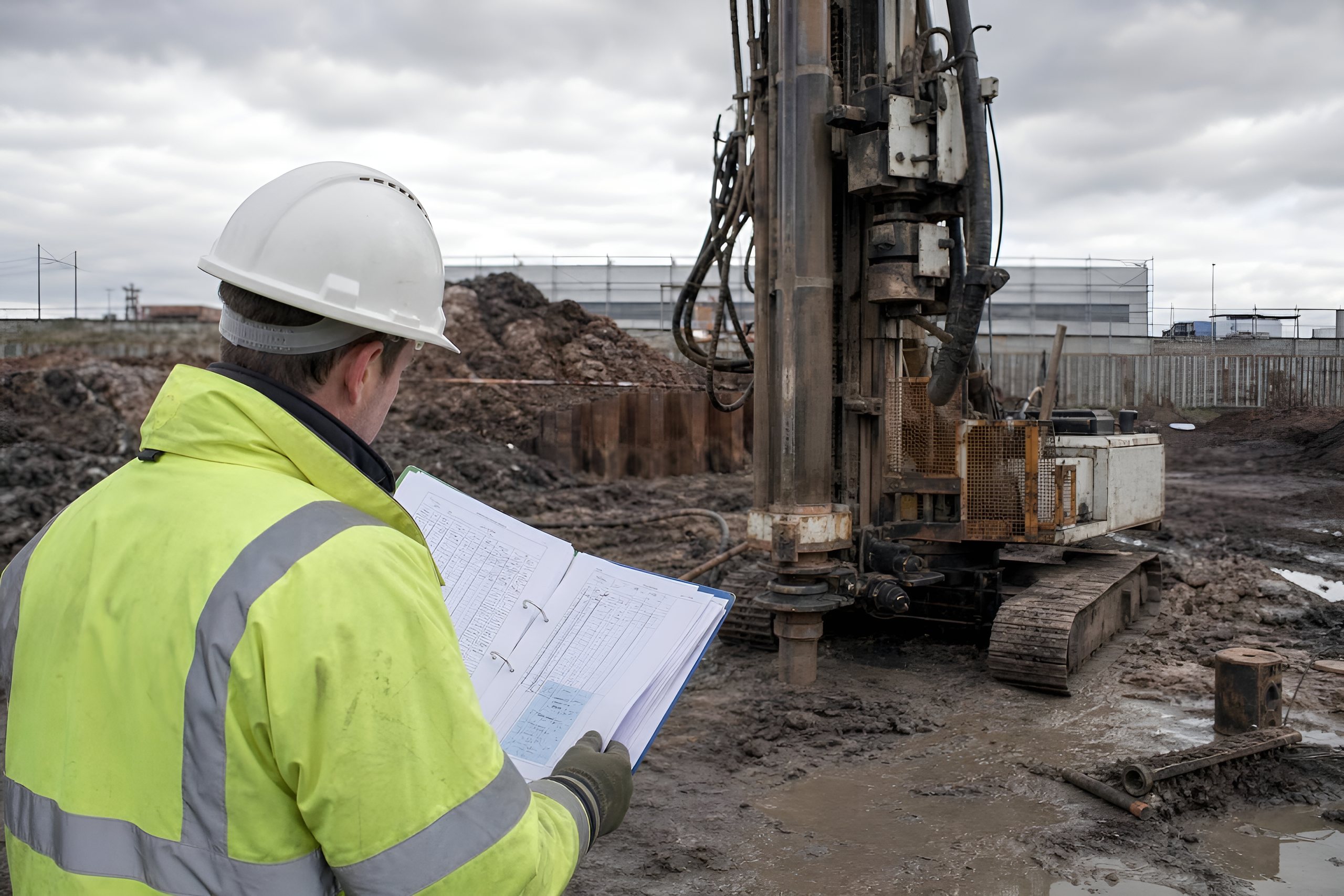
If you are commissioning a ground investigation now, on a programme that may still be under construction after 2028, state explicitly in the brief which generation of Eurocode 7 the resulting reports are to be prepared against. Given BSI's default position described above, an unstated brief defaults to first generation, which may not be what a long-running design and build contract actually wants if parts of the works are detailed later in the programme. This is the same reasoning that applies to any ground investigation feeding into excavation support design or a wider civil and geotechnical scope: the basis has to be fixed before the work that depends on it starts, not discovered afterwards.
What it means for reviewing a geotechnical design report
A geotechnical design report should state the design basis it has been prepared to, including the edition of Eurocode 7 and the relevant National Annex. During coexistence, that statement is no longer a formality. A report silent on which generation it follows, submitted after 2025 but before the 2028 withdrawal date, is relying on the same BSI default: first generation applies unless the specification says otherwise.
Reviewing that statement belongs in the same kind of exercise we describe in our note on pre-construction structural review for contractors: read the report as the party who has to rely on it, not as the party who wrote it, and ask the basis-of-design question before the report is relied on for procurement or planning, not after a query comes back from site.
Procuring a geotechnical designer during the coexistence period
The UK-specific detail that makes the second generation usable, the National Annexes, is still being finished. ICE's briefing notes that in 2023 Andrew Bond took over as chair of B/526, the BSI committee that looks after British Standards for geotechnics, and that he is leading the work preparing National Annexes for the second-generation Eurocode 7 and planning amendments and revisions to British Standards that will be affected by the new code.
That is a reasonable basis for a direct procurement question: ask a tendering geotechnical designer which generation and which National Annex they intend to design to, and how they will handle any gap if the relevant UK annex for a particular part is not yet finalized when the design is due. A designer who cannot answer that clearly is asking you to accept a basis of design nobody has actually agreed. Our civil and geotechnical service and feasibility and pre-construction review both start from fixing that basis before design work is commissioned.
A practical checklist for contracts spanning the transition
For any job that will still be live after 2026, and particularly anything that may still be under construction after 30 March 2028, we would check the following before the design or the ground investigation is let:
- State the generation of Eurocode 7 explicitly in the specification, do not leave it to default.
- Require the ground investigation brief and resulting reports to name the generation and National Annex they are prepared to.
- Require the geotechnical design report to carry an explicit basis-of-design statement, including the part structure it follows.
- If provisions from both generations are proposed on the same report, require the designer to set out how reliability is maintained at or above the first generation minimum.
- Confirm with any tendering designer which National Annex they intend to use and what happens if it is not yet finalized.
- Build a review point into the programme ahead of 30 March 2028 for any contract still running at that date.
None of this is complicated. All of it is cheaper to fix in a specification than to argue about once a geotechnical design report has already been relied on. If you want a second opinion on a ground investigation brief, a geotechnical design report, or how a long programme should handle the transition, our contact page has the details, or you can call us on 07715 541143.