Under CDM 2015, anyone who prepares or modifies a design, or arranges for it, is a designer and carries designer duties. That includes contractors who alter a design on site. Designers must eliminate, reduce or control risk through design, and pass on residual risk information.
The most expensive words on a construction site are "we just changed it slightly to make it work". Under CDM 2015 that sentence can move design liability from the consultant who was insured for it onto the contractor who was not.
Design responsibility is not decided by the contract. It is decided by who actually made the design decision. For main contractors carrying temporary works, sequencing and buildability decisions, that distinction is worth understanding precisely.
Who counts as a designer under CDM 2015?
CDM 2015 defines a designer by activity, not by job title. HSE describes a designer as an organization or individual whose business involves preparing or modifying designs for construction projects, or arranging for or instructing others to do so. Designs include drawings, design details, specifications, bills of quantity and design calculations (HSE).
That definition catches far more than the consulting engineer. HSE is explicit that designers can also be principal contractors, specialist contractors, tradespeople, or even commercial clients, if they get actively involved in design work for their project.
If you made a decision that determines how something is built and what it will carry, you are a designer for that decision. No contractual mechanism removes the duty, although contracts can and should allocate liability and insurance behind it.
What must a designer actually do?
HSE sets out the duties in a short and unforgiving list. Designers must:
- make sure the client is aware of the client duties under CDM 2015 before any design work starts
- take account of pre-construction information provided by the client and principal designer
- eliminate foreseeable health and safety risks to anyone affected by the project, if possible
- take steps to reduce or control any risks that cannot be eliminated
- provide design information to the principal designer, the client and the principal contractor so they can comply with their own duties
- communicate, cooperate and coordinate with other designers and with contractors, so designs are compatible and buildable
The first two words of that list do the heavy lifting: eliminate, then reduce, then control. This is a design-stage duty. A structural solution that is safe only if a particular sequence is followed perfectly, by an operative who has never seen the calculation, has not discharged it.
Where do contractors pick up design responsibility without meaning to?
Six recurring situations, all seen on ordinary UK sites.
Substitution. Swapping a specified section, connection, product or proprietary system for an available equivalent. The moment you make that judgement, you own it.
Value engineering on site. Reducing a section, deleting a stiffener, changing a bearing detail to save time or cost.
Sequence change. The permanent works design assumed a build order. Changing it can change stability at intermediate stages even though the finished structure is identical.
Making the detail work. The drawing shows a connection that will not physically fit. Site resolves it. That resolution is a design.
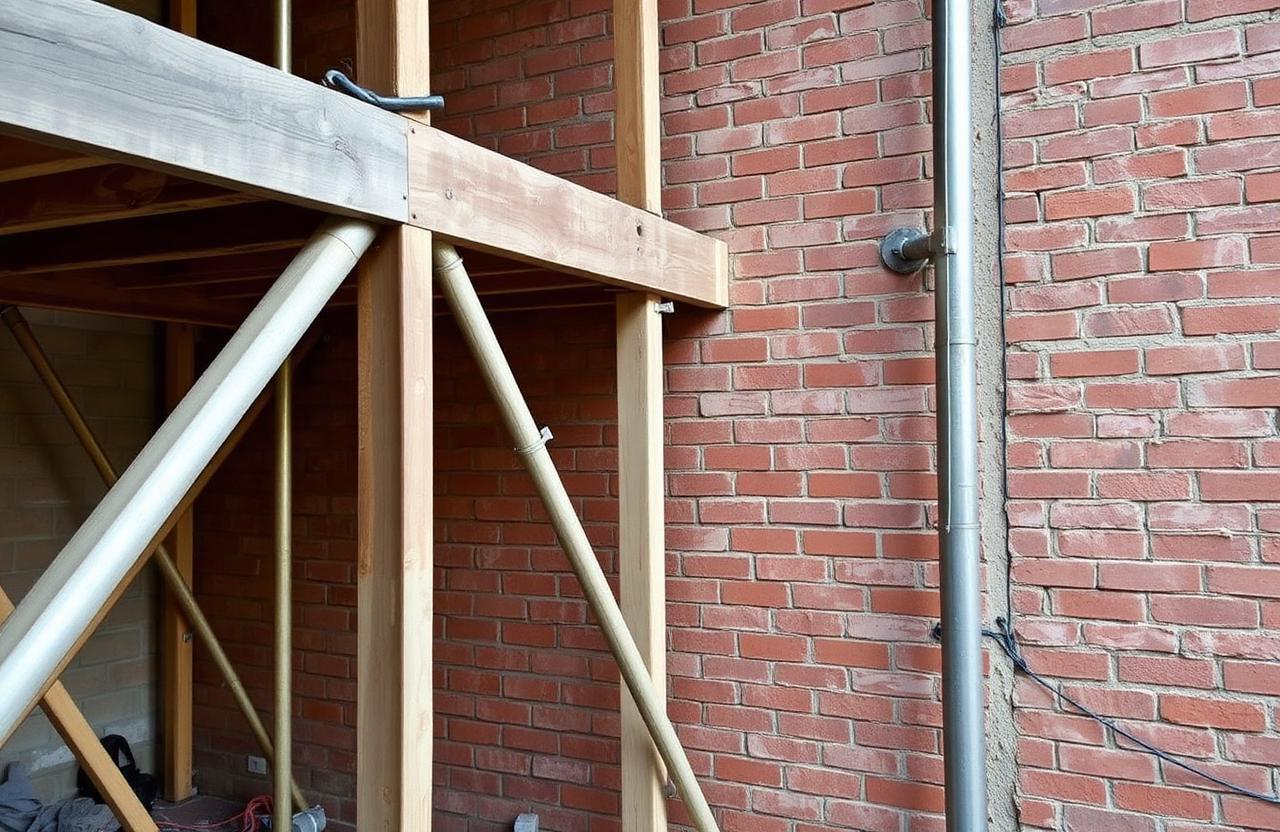
Temporary works. Almost always contractor-designed, and often the highest-consequence design decision on the project.
Reuse of existing structure. Propping off, or hanging from, an existing slab, beam or wall whose capacity was never assessed.
None of these are wrong in themselves. What is wrong is making them without a competent, insured designer producing and checking the design, and without recording the residual risk information that flows from it.
Why is temporary works the clearest case of contractor design?
Temporary works sit squarely inside designer duties, and BS 5975 provides the procedural control system that discharges them: design brief, design, design check at the appropriate category, permit to load, inspection, permit to dismantle.
The relationship between the two is often missed. BS 5975 is a code of practice, not law. CDM 2015 and the Health and Safety at Work etc. Act 1974 are law. BS 5975 is how a contractor demonstrates the legal duty has been met to a recognized standard. Abandoning it means defending an alternative system after an incident, which is a much harder position to be in.
The residual risk information the regulations require maps directly onto what the temporary works coordinator needs before issuing a permit to load: load restrictions, the assumed sequence, limits on partial loading or early striking, wind limits, and the conditions under which the design ceases to be valid. Where consequence of failure is high, the independent design check is the mechanism that proves the design decision was tested.
What information must a designer hand over?
A usable designer information pack contains, at minimum:
- Design assumptions. Loads, load combinations, ground bearing capacity, material grades, exposure conditions
- Assumed construction sequence, with a clear statement of where the sequence is critical to stability
- Temporary stability requirements. What needs propping, tying or restraining, and until what point
- Load limits during construction. Maximum imposed load on a partially complete structure, striking times, early loading restrictions
- Residual risks that could not be designed out, expressed in the language of the person who will face them
- Interfaces. Where this design relies on another party's design being correct, stated explicitly
- Maintenance and demolition information for the health and safety file, including anything unusual about how the structure comes apart
If your engineer's information pack is a generic hazard list, it does not discharge the duty and it will not help anybody on site.
What is the difference between the two principal designer roles?
A point of genuine confusion since late 2023. There are now two distinct roles sharing one job title.
The CDM principal designer is appointed under CDM 2015 where there is more than one contractor. They plan, manage and monitor the pre-construction phase, coordinate health and safety, ensure designers comply with their duties, and prepare the health and safety file.
The Building Regulations principal designer, introduced by the dutyholder and competence regulations that came into force in late 2023 under the Building Safety Act regime, plans, manages and monitors design work so that the design, if built, would comply with the Building Regulations. It is a building compliance role, not a health and safety role.
The same organization can hold both, and a client can appoint the CDM principal designer as the Building Regulations principal designer. That does not make it appropriate. The competence required differs, and the client must satisfy themselves of competence before appointing. For a main contractor the practical consequence is simple: confirm in writing which role each appointment covers, and never assume one discharges both.
How does design responsibility work on a design and build contract?
Design and build is where contractors carry the most design responsibility and understand it the least, because the commercial transfer and the statutory duty are two different things that happen to travel together.
The commercial position. Under a design and build form the contractor takes on responsibility for completing the design, usually novating the client's original consultants. What actually transfers is defined by the employer's requirements and the contractor's proposals, and the gap between those two documents is where most design disputes live.
The statutory position. Duties under CDM 2015 do not move with the contract. They attach to whoever prepares or modifies the design. A novated consultant still holds designer duties for their own design work, and the contractor holds them for anything the contractor decides.
Three practical consequences worth building into the procurement:
- Novation does not transfer the past. The consultant's pre-novation design was produced for the client. Check what was designed, to what brief, and what was assumed, before you inherit it.
- Design responsibility levels should be stated per element. A schedule saying who designs the frame, the connections, the temporary works and the interfaces is worth more than a general clause saying the contractor is responsible for everything.
- Check the professional indemnity chain matches the design chain. If a specialist subcontractor is designing a package, their cover, not yours, should sit behind it, at a level proportionate to the consequence of failure.
The recurring failure is a contractor accepting design responsibility for an element nobody has actually designed, discovering it on site, and resolving it with whoever is available that afternoon.
What should you demand from your structural engineer?
A short procurement checklist closes most of the exposure.
- Chartered status and relevant experience, meaning demonstrable experience of the specific structural form, not general experience
- Professional indemnity insurance at a level appropriate to the consequence of failure, confirmed in writing and current
- A written scope stating exactly which elements the engineer is designing and which they are not
- Explicit acceptance of designer duties under CDM 2015 for the elements in scope
- A designer information pack delivered with the design rather than promised later
- Design check arrangements stated up front: the check category, who checks, and whether independence is required
- Availability during construction. A design query on a live site is worth answering in hours, not weeks
- A named engineer, so you know whose judgement you are relying on
Who holds which duty?
| Role | Core duty | Typical holder |
|---|---|---|
| Designer | Eliminate, reduce or control risk by design; provide design and residual risk information | Consulting engineer, architect, temporary works designer, specialist subcontractor, contractor making design decisions |
| Principal designer, CDM | Plan, manage and monitor the pre-construction phase; coordinate health and safety; health and safety file | Lead designer or dedicated CDM practice |
| Principal designer, Building Regulations | Plan, manage and monitor design so the design would comply with the Building Regulations | Lead designer, subject to separate competence assessment |
| Principal contractor | Plan, manage and monitor the construction phase | Main contractor |
| Contractor | Plan, manage and monitor own work; do not start unless satisfied arrangements are adequate | All contractors |
For how this plays out on a live package, see our guides to working with a structural engineer as a contractor and RC frame and steelwork connections.
Frequently Asked Questions
Written by the founder of PV Consulting, a Chartered Engineer (CEng MICE, Institution of Civil Engineers) with over 30 years of experience in temporary works design, independent design checks and structural engineering across nuclear decommissioning, infrastructure and commercial construction. PV Consulting Ltd, company number 08294917, registered in England and Wales, professional indemnity insured.